About Canso Islands National Historic Site
Parks Canada site on the Eastern Shore preserving the 18th-century English fishing settlement and earthen fort on Grassy Island. Free boat shuttle to the island, visitor centre with displays on the fish and fur trades, and the story of the 1744 battle for Canso.
Features & Highlights
Detailed Information
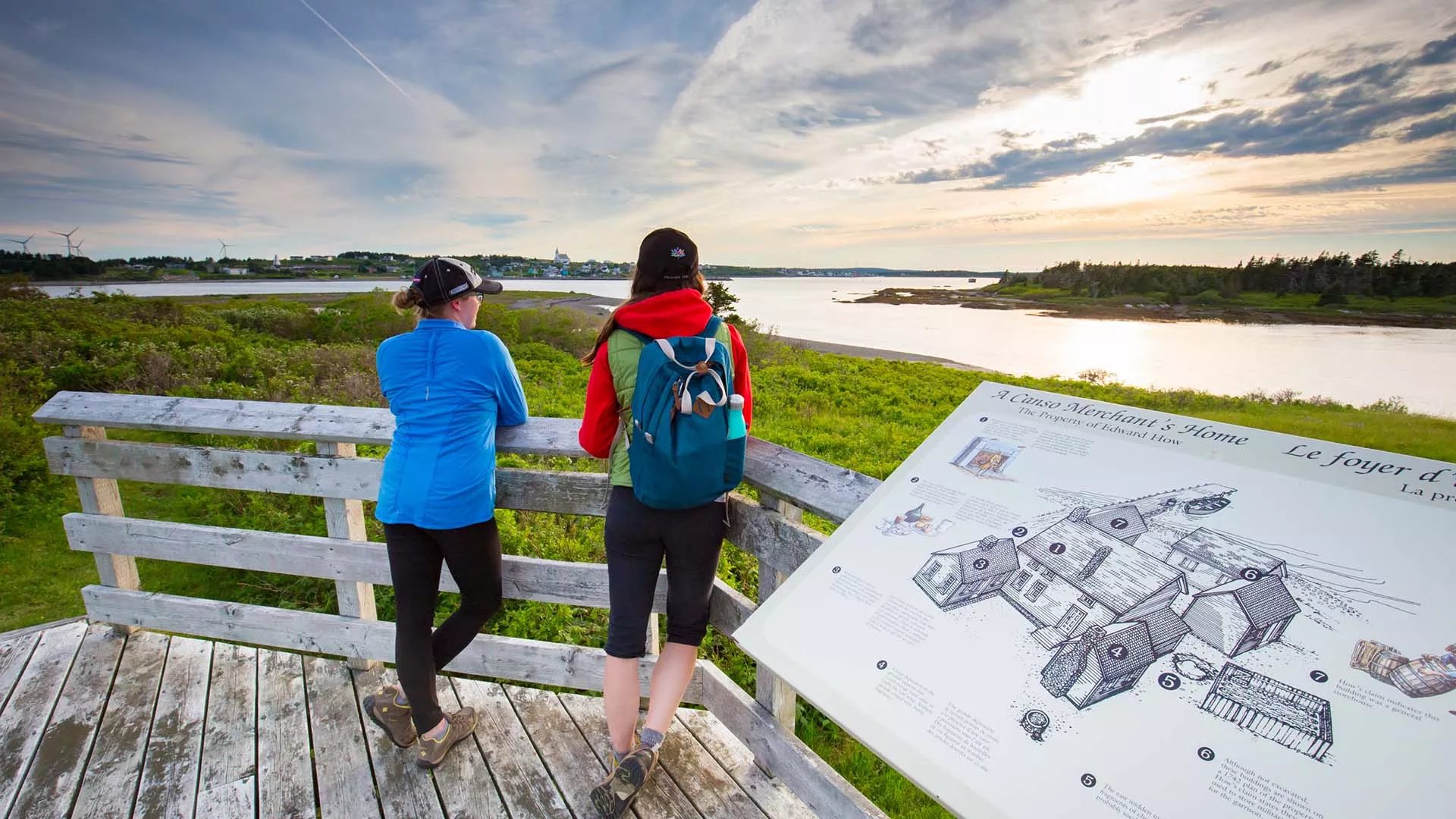
At the end of the Marine Drive, where Nova Scotia's Eastern Shore meets the open Atlantic, Canso Islands National Historic Site preserves one of the province's most dramatic and least-visited chapters of history. A short boat ride from the fishing village of Canso, Grassy Island holds the ruins of an 18th-century English fishing settlement and earthen fort — a windswept archaeological site that saw a pitched battle in 1744 and was abandoned for good after being sacked. Today, a free Parks Canada boat shuttle carries visitors across the harbour to walk among the ruins, explore the remains of the fort, and imagine life at one of North America's oldest continuously used fishing grounds.
The story begins long before the English arrived. The Mi'kmaq used the Canso Islands as a base for fishing and travel, and by the early 1600s French fishermen were building wharves and fish flakes along the shores — Canso's cod fishery was among the richest in the New World. English settlers followed, and in 1720 the Crown built a fort on Grassy Island to protect the settlement. That fort was captured by the French in 1744 in a battle that became one of the key conflicts of King George's War, and the settlement never fully recovered. The site is a reminder of how the struggle for North America played out in the small, brutal contests of the fishing frontier.
Practical Information
Address & Location
1465 Union Street, Canso, NS B0H 1H0
Canso sits at the tip of the Eastern Shore, a 4-hour drive from Halifax along the scenic Marine Drive (Route 316/344) or 3.5 hours from Sydney. The visitor centre and ferry dock are on the Canso waterfront in the heart of town, near the Canso Museum and the Stan Rogers Folk Festival grounds.
Hours of Operation
- Visitor centre: July 1 to September 2, 2026, 10 am to 6 pm daily
- Grassy Island boat shuttle: operates through the summer season, roughly 10:00 am to 3:30 pm, weather permitting and on a first-come, first-served basis
- The shuttle is free; visitors get 40–45 minutes on the island for a self-guided walk of the fort and settlement ruins
Admission
- Free — Canso Islands National Historic Site has no admission fee for the visitor centre or the Grassy Island ferry
- Call (902) 366-3136 ahead of your visit to confirm the shuttle is running; delays or cancellations can occur due to weather or staffing
Amenities
- Parks Canada visitor centre with engaging displays on the fishing history and the 1744 battle
- Parking and picnic tables
- Electric vehicle charging stations at the visitor centre
- Boat launch and kayak/canoe access — bring your own paddlecraft to explore the islands at your own pace
- Washroom facilities at the visitor centre
Contact
- Phone: (902) 366-3136
- Email: lhn-agb-nhs@pc.gc.ca
- Website: parks.canada.ca/lhn-nhs/ns/canso
Plan to spend a half day: an hour at the visitor centre, the boat trip and island walk (allow 2 hours round trip including time on the island), and time to wander the working fishing town of Canso itself — one of the oldest communities in North America, with a lively waterfront and the Canso Museum.
Combine your visit with the Stan Rogers Folk Festival (late July, if you time it right), the scenic cliffs and trails around Cape Canso, and nearby Guysborough. The drive down the Marine Drive is an attraction in its own right, passing fishing harbours, sandy beaches, and the coastal communities of the Eastern Shore. For travellers already heading to Cape Breton, Canso makes a memorable detour — this is authentic, off-the-beaten-path Nova Scotia at its best.
Canso Islands rewards the curious traveller willing to go a little further down the road. The ruins on Grassy Island are modest — low earthen walls and stone foundations — but the setting is magnificent: open ocean, gulls, and the sense of isolation that defined life here three centuries ago. The free shuttle, the enthusiastic interpreters, and the town's warm hospitality make it an easy and genuinely memorable stop.